Tuesday, 18 June 2013

Scopeulating!

HEY PEOPLE! Epic news time! I now possess the legend scope! It is enormous! It is a Zennox one and comes with a massive briefcase sort of case and separate cases and all of the things. The things are the scope (you don't say?), a  a pair of amazeballs giant binoculars, a big tripod (I actually got this separately a mini-tripod, a little green monocular and about five yellow lens cloths! 

The big briefcase sort of case 
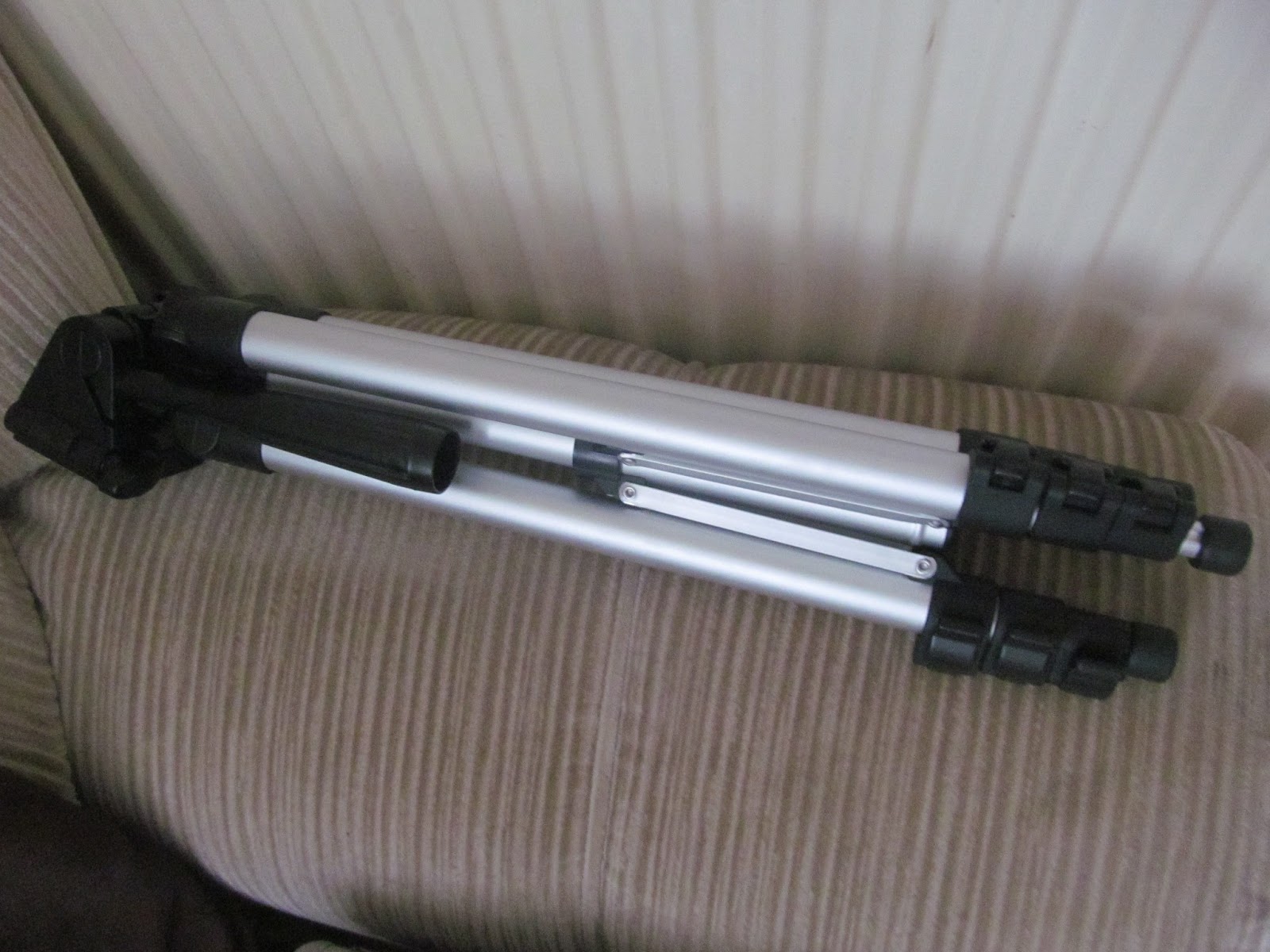
the big tripod (folded down)
little green monocular
Epic Binoculars
the mini-tripod


MASSIVE LEGEND SCOPE 
scope case with mini-tripod pocket
binoculars case (you can see one of the yellow lens cloths in the corner)
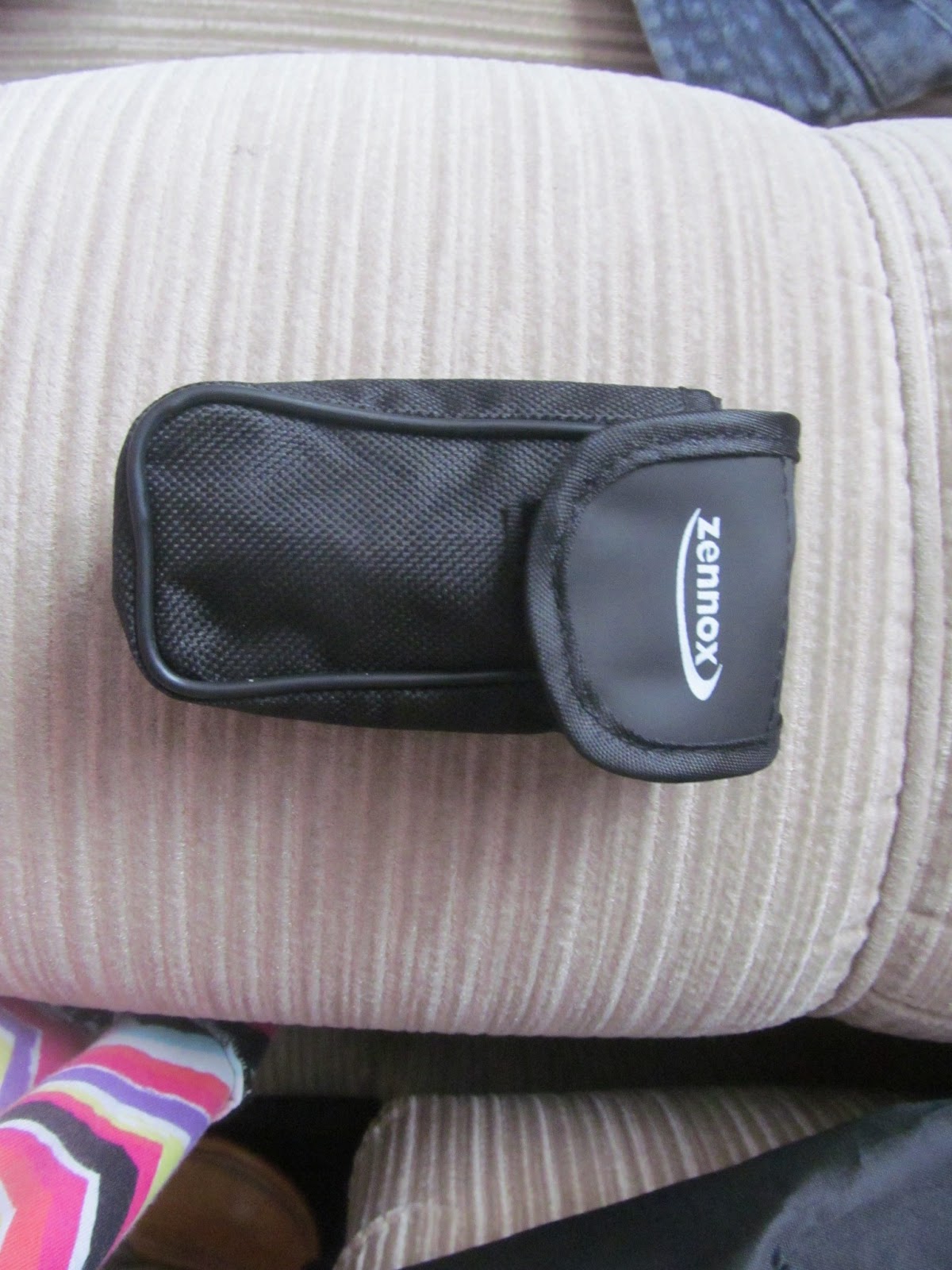
monocular case (yes I got my totally stripy dress in the way)

pretty cool huh? All for about £100. Pretty cheap when you look through them. I had a bit of trouble getting the scope on to the full size tripod. I think the scope is a bit too heavy for it. As I bought it separately, it was not really made for the scope.

BYE!!!


Sunday, 16 June 2013

Eggs and Nests - Common Garden Birds

 Right, hi. As I said ages ago... I'M  ON A ROLL!! Like I said also, I will do more on eggs and nests, so now I've got good old Getting Started With Bird-Feeding, "Bird Facts!", Getting Familiar With... and Eggs and Nests!! WOOP WOOP! With the breeding season under way, it seems necessary to do a post on egg and nest identification. I will try to catch up on the lagging blog posts and things will be back to normal. I can't believe the AWWC one is not up yet! My fault. We will start with some common garden passerines. We will go with the Robin (European), Blackbird (Turdus merula in case of confusion), Chaffinch, Blue Titmouse and Great Titmouse, some of the birds that anyone with a bird-feeder  and nesting-boxes/suitable woody plant can attract.

Robin nest by Josef Hlasek
Erithacus rubecula  - European Robin nest/eggs

The nest of the European Robin is a shallow, rather messy cup of grass, straw, hay, twigs, mud etc, built by the female. Robins will nest almost anywhere; old welly boots, watering-cans, jugs, coils of rope are just a few odd places recorded. A quick way to get Robins nesting in your garden is to use an open-fronted nesting-box. The eggs are off-white speckled with brown, heavier towards the base off the egg. There are usually 4-6 eggs and 3 successfully-fledged broods a year are not uncommon.


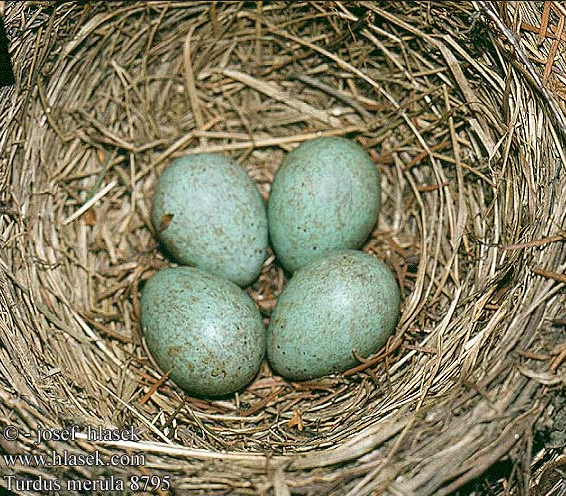
Blackbird nest by Josef Hlasek
Turdus merula - Blackbird nest/eggs

The Blackbird's nest is a more neat cup han the Robin's. Blackbirds generally have 2-3 broods a year although in a particularly good year, 4 may be attempted. The nest is made of similar materials to the Robin's but less scruffy. I is low down in suitable vegetation cover and built by the female. The eggs are a turquoise colour, speckled with brown. There are 3-5 eggs in each clutch.

Blue Titmouse nest on ARKive, I didn't have time
to find the photographer's name.

Parus caeruleus - Blue Titmouse nest/eggs
The Blue Titmouse originally nested in woodland tree holes and still does but increasing numbers are opting for titmouse-boxes in gardens. I woodlands, there can be up to 20 eggs in one clutch but in gardens here is usually no more than 10. The nest is a cosy, warm nest consisting of down, fur, wool, moss etc. The eggs are white, speckled brown.


Chaffinch nest. I couldn't find the photographer's
name but its a good pic!
Fringilla coelebs - Chaffinch nest/eggs
The Chaffinch is the commonest wild British bird. The nest is a cup made of plant material with down, spider's webs, moss, lichen, bark and wool in the mix. The Chaffinch can have 2 broods a year; 2-6 eggs in a clutch. The eggs are pale blue with a small amount of brown spotting at the base of the egg. The female builds the nest.   


Great Titmouse nest
in a titmouse-box. I couldn't find the
photographer's name. 

Parus major - Great Titmouse                                nest/eggs
The nest and eggs of the Great Titmouse are superficially similar                    to the Blue Titmouse but are slightly larger. They nest in tree holes, rock cavities and titmouse-boxes. The female builds the nest. It is made of moss, wool, fur, down, hay, bark, lichen, dead leaves, spider's webs etc. The clutch size can be as many as 18 eggs but 5-12 is more common. The clutch of 12 in the photo was laid in a titmouse-box. Larger clutches, as with all titmice, occur in more natural woodland habitats where there is more suitable food in abundance (caterpillars, grubs, worms etc.). 


"Bird Facts!" today is linked in with the Great Titmouse because I found out some tit-tastic facts!
Parus major newtoni by Richard Ford

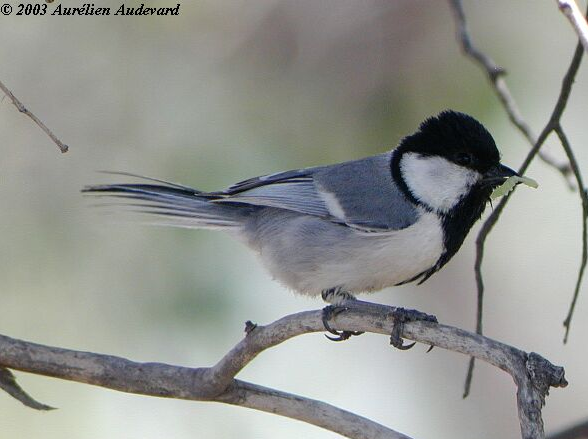
The 11 subspecies of Cinereous Titmouse (Parus cinereus)  were once lumped in with the Great Titmouse but genetic studies have shown that this group is a separate species. The Japanese Titmouse or Oriental Titmouse (Parus minor) was also once thought to be just a subspecies of Great Titmouse but is now known to be separate. There are 14 subspecies of true Great Titmouse, out British one being P.m. newtoni. The Turkestan Titmouse I like to consider a separate species, Parus bokorensis like it used to be, but the experts now  say it is a Great Tit subspecies. 
Turkestan Titmouse by Aurelian Audevard
Japanese Titmouse by Tetsuya Umezawa


P.S. I HAVE GOT MY SCOPE BINOCULARS ETC!!!! IT IS LEGEND. I will do my next post on it. Bye!

Saturday, 8 June 2013

I have a scope!!!

LIKE A BOSS. I have ordered a scope that comes with a monocular, a pair of binoculars, a tabletop tripod, a full size tripod, individual cases for all of these and a big case that fits it all. LEGEND LEGEND LEGEND.  

"Bird Facts!"

Wrens (Troglodytes troglodytes) will use nesting-boxes as roosting sites. The record saw 63 Wrens in one standard titmouse-box! Sometimes, if too many Wrens gather in one nesting-box, they can actually suffocate in their own heat!

Troglodytes troglodytes, the Wren. 


bye!

Monday, 20 May 2013

"Bird Facts!" and news

Hey! Time for a quick "Bird Facts!" and some news about my epic birdy stuff. It was my birthday on Friday so we went to the Arundel Wildfowl and Wetlands Centre (WWT). There is tons of exotic Anatidae (ducks, geese, swans, wildfowl is what I could have said but I like to be SPECIFIC!!!! no there was no need for the !!!!'s). One of the ones I liked best was the Coscoroba Swan (Coscoroba coscoroba (what an imaginative scientific name!), featured in the "Bird Facts!"). I don't know why. Any way I will do a whole post on that BEFORE THE EGGS AND NESTS LUCKY PEOPLE IS YOU. Unfortunately I can't show you every photo we took because there is 216 of them. I LOVE THAT PLACE. It makes those birds I read about in The Great Book Of Birds a reality, not just paintings in the book (albeit very good ones). I discovered some birds I did not even know existed, chatted about scopes, all sorts of stuff SO GO THERE!!! It is totally like a boss.

"Bird Facts!" 

The Coscoroba Swan (Coscoroba coscoroba as mentioned earlier) is the smallest swan in the world with a legend call (I like it anyway) that it is named after. "Cos-cor-oo!". At the AWWC I (having never seen one in my life) mistook it for a   White Call-duck, a breed of domestic Mallard (see the post on domestic Mallards that look like wild Mallards) that was also there when it had it's head in the water. By contrast, the Trumpeter Swan with a scientific name I love (Cygnus buccinator, no, I don't have a clue why I like it so much) is the largest swan, the largest waterfowl in the world and the heaviest bird native to North America. HOLY CRAP IT IS HUGE! I think those Trumpeter Swans are going "Like a boss! Like a boss! Like a like a like a boss!" at the moment.
Trumpeter Swans, the largest swans. Look at them.
They are laughing at how small that Mallard is. Photo by Lynn M. Stone.
Coscoroba Swan, the smallest swan. Photo by me at the AWWC.

Thursday, 9 May 2013

"Bird Facts!"

Hey! Here comes!!:

"Bird Facts!" 


Adelie Penguin. Tiny but one of the
most aggressive penguins!
Emperor Penguins.
THIS IS NOT PHOTOSHOPPED!!

The flightless Great Auk is an extinct bird very sadly. I would like to see a live one of these pretty much double-sized Razorbills with normal-sized Razorbill wings! The Great Auk was the original penguin, hence the Latin name, Pinguinus impennis, "imperial penguin". The penguins we know today are called so because of their similar shape, flightlessness and swimming ability to the Great Auk. The last breeding pair were killed on Eldey off the coast of Iceland and their egg smashed in 1844. The last sighting of this species was in 1852.
Again, thanks to all the epic people who take photographs of wildlife. 
A stuffed Great Auk, one bird I will never see
and will mourn forever.

The only known illustration
of a Great Auk drawn from life, Ole Worm's pet
received from the Faroe Islands. 
   

Wednesday, 8 May 2013

"Bird Facts!"

Well, double posts for the day! I just read a thing abou parallel evolution in birds and it was epic so I had to do a "Bird Facts!" about it. Here comes:

"Bird Facts!"

The Common Swift, Apus apus (as an example of the swift order Apodiformes THEY ARE NOT PASSERINES) is a very similar shape to the House Martin, Delichon urbicum (as an example of the Hirundinidae of the order Passeriformes THEY ARE PASSERINES). You could be forgiven as a "light" or beginner birdwatcher for believing the two to be in the same family. However, these two birds are an example of parallel evolution which is awesome. The two birds live in similar habitats and so have developed the same characteristics, despite being unrelated. If you see a swift (any Apodiforme) on the floor, unable to fly, pick it up and chuck it! Apodiformes have little muscles in their legs so cannot jump and take of from the ground. Bird-nerds call this "launching" a bird. When it hits the floor and becomes immobile, we call it "grounding". Only then if it can't fly do you consult an expert. Martins, river-martins and swallows differ from the swifts in that they frequently land and have muscular legs (they are Passeriformes, DUH.) and so can launch themselves.  BYEEEEEEEEEEEEEEEEEEEEE!
Common Swift (Apus apus)
House Martin (Delichon urbicum)


i can't think of a title

Hi. I am just saying there WILL be a proper post coming up but it will take a while so it may not be done today. If it is taking too long, I have my "Falcons. Because they are." post ready. This is a post about falcons that I made ages ago and reserved for a time when I will need it to fill in a "gap in the posting". Well, the next post if it is not "Falcons. Because they are." will be "Eggs and Nests - Common Garden Birds". I'M ON A ROLL!! I will do more stuff on eggs and nests because it is VERY (VERY VERY VERY VERY etc) important to know that if you see a group of four similar oval pebbles, YOU MUST NOT STEP ON IT OR YOU WILL BE THE MURDERER OF FOUR BEAUTIFUL BIRDS called Little Terns.

Sterna albifrons, "white-fronted sea swallow", the Little Tern -
mother and chick (not quite the graceful image of his mum!)
Little Tern eggs. See how hard
it is to  see them now?

Little Tern chicks. They look just as much like pebbles as the eggs.
Bye for now!